Hormesis from a Massage Therapist’s Point of View
September 28 2026
By Boris Prilutsky
Those who follow my writings know that, during professional discussions, I often make a distinction between general biomedical science and the science of massage.
Science of massage therapy is deeply rooted in anatomy, physiology, neurology, biomechanics, vascular physiology, and other biomedical sciences. However, the clinical application of massage is a different level of knowledge. It involves the relationship between a specific hands on stimulus, the tissues and receptors receiving that stimulus, the nervous system's response, and the observable physiological and clinical consequences.
For centuries, massage practitioners have accumulated an enormous body of clinical observations. Much of this knowledge has developed through repeated clinical application and observation rather than through modern laboratory research only. This does not mean that massage therapists should reject modern research. Quite the opposite. We should use modern science to test, explain, refine, and sometimes challenge what we observe clinically.
But I believe we should also ask an important question:
When we read the “modern literature,” are we actually reading massage research—or are we applying research from exercise physiology, pharmacology, neuroscience, or other disciplines to massage without first demonstrating that the same physiological mechanism occurs during massage?
That question brings me to hormesis.
A Question from a Fellow Massage Therapist
This discussion was inspired by a question recently posted by a member of my professional Facebook group:
“Would stimulating kneading techniques stimulate hormesis? Or would a combination of lymphatic and stimulating kneading? I don't even know if it's possible, but if exercise can stimulate hormesis, I was wondering about massage?”
My initial answer was yes, massage stimulation participate in an adaptive response resembling hormesis. Several members disagreed, understandably pointing out that there is little or no direct medical literature demonstrating that massage produces a hormetic response. That criticism is legitimate. But I believe there is another legitimate question:
Does the absence of specific medical literature demonstrating a hormetic response to massage prove that such a physiological response cannot occur?
Of course not.
What Is Hormesis?
Hormesis is generally described as an adaptive biological response to a relatively mild or intermittent stressor. Exercise is one of the best-known examples. Exercise creates mechanical, metabolic, oxidative, thermal, and other physiological challenges. These transient challenges can activate signaling pathways involved in adaptation and recovery. Importantly, hormesis is not simply another word for “something beneficial happened.”
A true hormetic hypothesis requires us to demonstrate something more specific:
stimulus → transient biological challenge → adaptive response → increased capacity or resilience.
Therefore, if we want to claim that massage produces hormesis, we ultimately need to demonstrate this sequence experimentally. That is precisely why I believe the question deserves discussion.
Physiological Effects of Massage on the Human Body
Before asking whether massage could produce a hormetic response, we should first ask a more fundamental question:
What does massage actually do physiologically? I would divide the effects into two interconnected categories:
1. Mechanical effects
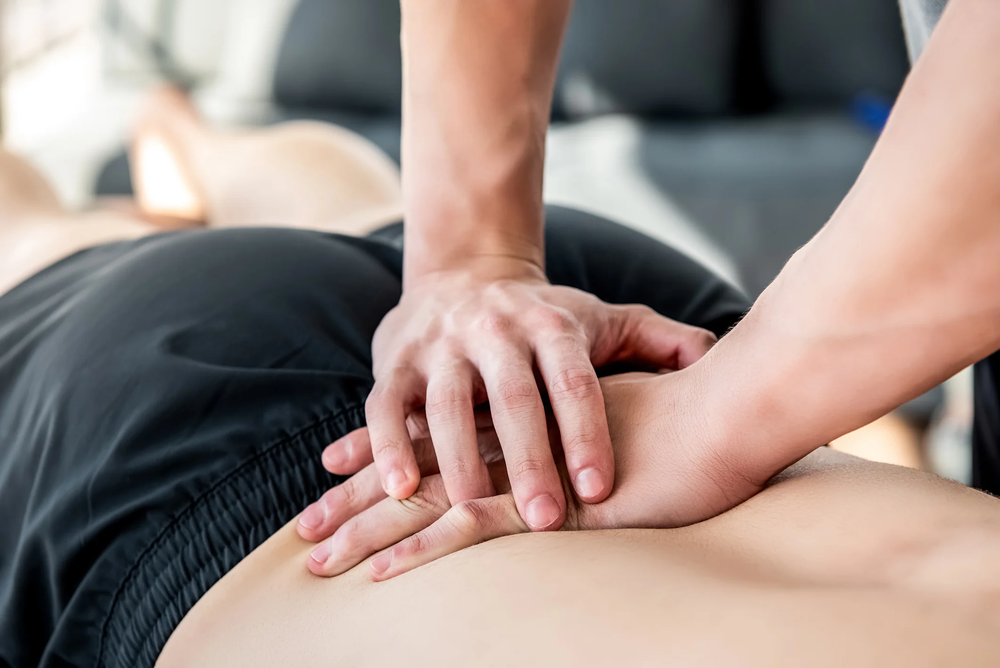
Massage mechanically deforms skin, fascia, and muscle. By deforming mechanoreceptors we are releasing action potentials that reaching and stimulating CNS triggering massive positive changes in functions of organs and systems. In more details . Depending on the technique, direction, pressure, speed, duration, and tissue being addressed, massage manipulation produce:
- tissue deformation
- compression and release
- shear forces
- changes in local pressure
- movement of interstitial fluid
- mechanical stimulation of sensory receptors
- changes in muscle tone
- changes in local blood flow
- and mechanical loading of connective and muscular tissues.
2. Neural and reflex effects
This is, in my opinion, where the physiology of massage becomes particularly interesting. When massage mechanically deforms tissues, mechanosensitive sensory structures stimulated. Sensory information travels through peripheral nerves to the central nervous system, where it can influence spinal and supraspinal activity. This is not merely theoretical.
Experimental studies have demonstrated that massage can alter the H-reflex, a laboratory measure related to spinal reflex excitability. Massage of the triceps surae, for example, produced a significant reduction in H-reflex amplitude in human subjects. Researchers subsequently investigated whether superficial cutaneous receptors explained the response and found evidence pointing toward involvement of deeper mechanoreceptors.
This is an important observation for massage therapists. It demonstrates that a massage stimulus applied to peripheral tissues can produce a measurable change in nervous-system function.
An Action Potential Is Not Necessarily a Stressor
Here I want to make an important distinction. When sensory receptors are stimulated and action potentials are generated, we should not automatically call that a stressor. An action potential is a physiological electrical signal. A stressor, in the context of hormesis, is something different: a challenge or perturbation capable of producing a sufficiently meaningful biological disturbance to initiate an adaptive response. Therefore:
mechanical stimulation → sensory signaling does not automatically mean:
mechanical stimulation → hormesis. There is an additional step that must be demonstrated. The question is whether a particular dose and pattern of mechanical stimulation can produce a biological challenge sufficient to activate adaptive cellular pathways. That is where the hypothesis becomes scientifically interesting.
Could Kneading Provide Such a Stimulus?
Consider stimulating kneading. During kneading, tissue is repeatedly compressed, lifted, displaced, stretched, and released. This produces mechanical forces within the tissue. Cells are not mechanically passive. Mechanical forces can be converted into biochemical signals through processes collectively described as mechanotransduction. This is already an established area of physiology. Therefore, there is a logical chain worth investigating:
Mechanical deformation ↓ Activation of mechanosensitive structures ↓ Cellular and neural signaling ↓ Changes in tissue and nervous-system activity ↓ Recovery and adaptation
The critical question is what happens after repeated exposure. Does repeated, appropriately dosed massage stimulation produce only an immediate physiological response?
Or could repeated stimulation produce longer-term adaptive changes?
Massage Is Not Exercise
We should also avoid making the opposite mistake. Because exercise can produce hormesis, it does not follow automatically that massage produces hormesis. Exercise involves active muscle contraction, increased energy expenditure, metabolic demand, mechanical loading, changes in oxygen utilization, and multiple systemic responses. Massage is predominantly a passive mechanical intervention.
Therefore, the physiological response to massage may be fundamentally different from exercise. At the same time, exercise research demonstrates that mechanical and metabolic challenges can participate in adaptive signaling, making it reasonable to investigate whether appropriately dosed mechanical stimulation from massage can activate some overlapping pathways.
What About Deep Kneading?
This is where massage therapists need to be particularly careful. I do not believe that:
“The stronger the massage pressure, the better the physiological effect.” That is too simplistic.
More pressure does not necessarily mean more beneficial stimulation. Opposite, in most cases it is harmful. The objective should be appropriate mechanical stimulation, not maximum pressure. Excessive pressure can produce pain, protective muscle guarding, tissue irritation, or other undesirable responses.
In my clinical approach, the therapist should recognize the difference between therapeutically significant mechanical stimulation and excessive stimulation that activates protective responses. The appropriate dose may differ substantially between individuals and between clinical conditions. This is another reason why the concept of hormesis is interesting.
Hormesis is fundamentally a dose-response concept. Too little stimulation may produce little adaptation. An appropriate stimulus may produce adaptation. Excessive stimulation may produce a completely different response. That is very similar to one of the fundamental principles of therapeutic massage:
The question is not simply how much pressure we can apply. The question is how much stimulation the tissue and nervous system can appropriately receive.
What About Acceleration of Lymphatic Drainage Plus Stimulating Kneading?
This is an even more interesting question. Lymphatic techniques and stimulating kneading do not necessarily produce identical physiological stimuli. A lymphatic technique is intended to provide relatively gentle mechanical stimulation and influence fluid movement and lymphatic function. Kneading provides a different mechanical stimulus involving compression, displacement, deformation, and sensory stimulation.
Therefore, combining the two could theoretically produce different physiological inputs than either technique alone. But we should not jump from that observation to:
“The combination produces hormesis.”
That has to be demonstrated. A scientifically interesting hypothesis would be:
Could a specific sequence and dose of lymphatic and mechanical stimulation produce measurable adaptive physiological responses that are not produced by either intervention alone?
That is a testable question.
Another Important Example: The Nervous System
Massage provides an especially interesting example because its effects are not limited to the tissue being mechanically manipulated. Experimental studies of massage have demonstrated changes in spinal reflex excitability.
Clinical research has also reported effects of massage on variables such as heart rate, blood pressure, and anxiety. A meta-analysis of randomized trials found reductions in state anxiety, blood pressure, and heart rate following single massage applications,. This is important because it reminds us that massage is not simply moving tissue around.
A massage stimulus can be translated into neural information and can be associated with measurable changes in physiological state. The unanswered question is whether some forms of repeated massage stimulation can go beyond immediate responses and produce adaptive changes .
From Physiological Response to Hormesis
This distinction is critical. A massage session produces:
mechanical stimulation → neural response → vasomotor response → change in muscle tone. That demonstrates a physiological response. It does not yet demonstrate hormesis. For hormesis, we would need evidence that repeated, appropriately dosed stimulation produces an adaptive response that increases the body's capacity to respond to a subsequent challenge.
For example, researchers and constant clinical out put supporting ,repeated massage stimulation changes:
- cellular stress-response pathways
- mitochondrial signaling
- antioxidant defenses
- inflammatory signaling
- autonomic regulation
- tissue recovery
- neuromuscular responsiveness
- or other validated physiological markers.
Does it qualifies as hermetic?
Why I Think We Should Ask This Question
My concern is not that massage therapists should take a new scientific term and immediately attach it to massage. Quite the opposite. We should be more clinically demanding, not merely theoretical. When we encounter the word hormesis in exercise physiology, neuroscience, toxicology, or molecular biology, we should ask:
- What is the actual stimulus?
- What is the dose?
- What physiological pathway is activated?
- What biological adaptation was measured?
- Was the response reproduced?
- And, most importantly, has this mechanism actually been demonstrated with massage?
If the answer to the last question is no, then we should say:
“This is not applicable to massage procedures; these belong to different fields.”
My Proposal
Based on the known physiological effects of mechanical stimulation and the established concept of hormetic adaptation, I believe it is reasonable to propose the following:
Certain forms of appropriately dosed, repeated massage stimulation produce adaptive physiological responses through mechanical, neural, and cellular signaling pathways, sharing characteristics with hormesis.
A Final Question for Massage Therapists
We frequently hear:
“There is no literature supporting that.”
Sometimes that is an appropriate scientific objection. But there is another question we should ask:
Has anyone actually studied the question using the appropriate massage intervention, dose, technique, and outcome measures? If nobody has, then the absence of literature is not necessarily evidence that the phenomenon does not exist. It may simply mean that we have not yet asked the right question.
For more than a century, massage research has demonstrated that massage stimulation can influence physiological variables, including neuromuscular excitability and cardiovascular responses. It is clinically proven ,appropriately dosed mechanical stimulation can also produce measurable adaptive cellular and systemic responses. That is the question I would like to put on the table for discussion:
Can massage create a physiological stimulus capable of initiating an adaptive response that resembles hormesis?
The answer is yes.
References
- Mattson MP. Hormesis defined. Ageing Research Reviews. 2008.
- Ji LL, Kang C, Zhang Y. Exercise-induced hormesis and skeletal muscle health. Free Radical Biology and Medicine. 2016.
- Ristow M, Schmeisser S. Mitohormesis in exercise training. Free Radical Biology and Medicine. 2014/2015.
- Morelli M, Chapman CE, Sullivan SJ. Do cutaneous receptors contribute to the changes in the amplitude of the H-reflex during massage? Electromyography and Clinical Neurophysiology. 1999.
- Morelli M, et al. H-reflex modulation during manual muscle massage of human triceps surae. Archives of Physical Medicine and Rehabilitation. 1991.
- Moyer CA, Rounds J, Hannum JW. A meta-analysis of massage therapy research. Psychological Bulletin. 2004.
- Moyer CA, et al. Does massage therapy reduce cortisol? A comprehensive quantitative review. Journal of Bodywork & Movement Therapies. 2011.
- Nelson NL. Effects of massage on blood pressure in patients with hypertension and prehypertension: A meta-analysis of randomized controlled trials. Journal of Human Hypertension. 2015.
Summary
For the summary, I am offering you the opportunity to read the article linked below, with special attention to the Five Miracles of Massage Therapy.
https://www.medicalmassage-edu.com/blog/medical-massage-simplifying-a-complex-matter.htm
The procedures we engage in, especially medical and sports massage, are firmly rooted in science-based principles. I invite you to visit my website, specifically the blog that delves into the history of medical massage:
https://www.medicalmassage-edu.com/blog/the-history-of-medical-massage.htm
Science Translational Medicine is a reputable source in medical publications. The editorial board’s approval of research papers for publication is held in high regard within the medical community. In fact, I am personally familiar with the development of a research protocol that has recently been accepted for publication. The outcomes of this research, which replicate a substantiate the foundational principles underlying the entire medical and sports massage scope of practice.
I encourage you to proudly refer to this study. Furthermore, let us collectively undertake the responsibility of educating the healthcare profession.
“Massaging Muscles May Reduce Inflammation, Spur Mitochondria Formation”
The study “Massage Therapy Attenuates Inflammatory Signaling After Exercise-Induced Muscle Damage”, published in Science Translational Medicine (DOI: 10.1126/scitranslmed.3002882, 119ra13, 2012), by Justin D. Crane and colleagues, provides an important example of how massage can produce measurable physiological effects.
USA Today reported in “Science Fair” that, according to the study, “kneading muscles reduces inflammation and spurs cellular energy production.” In the experiments, researchers found that massaged muscle cells had higher activation of gene pathways associated with mitochondria, as well as fewer signs of painful inflammation. However, massage did not lower levels of lactic acid buildup in muscles, which is often blamed for the “burn” experienced during exercise.
The Los Angeles Times reported that massage also seemed to help cells recover by increasing amounts of another protein called PGC-1alpha, which stimulates the production of new mitochondria. The Times added that, according to researcher Dr. Mark Tarnopolsky, exercise is the best way to reverse damage caused by common conditions including diabetes, obesity, and aging.
Bloomberg News reported that subjects exercised to exhaustion, which took about 70 minutes. One leg was massaged while the other was not. Both legs were biopsied immediately after the therapy and again 2.5 hours later. The massaged leg showed slower production of interleukin-6 and tumor necrosis factor alpha, both associated with inflammation.
According to the Wall Street Journal Health Blog, the researchers hypothesized that reducing the production of molecules associated with inflammation may be similar to the mechanisms of action of aspirin and ibuprofen, both of which have anti-inflammatory effects.
WebMD reported that, in recent years, a number of studies have shown that remedies for muscle soreness that work by turning down inflammation—including ice baths and anti-inflammatory medications—may also have a downside because they may block some aspects of muscle repair and growth that depend on inflammation.
However, according to Tarnopolsky, this study suggests that massage may be an intervention that suppresses the inflammatory response while still allowing, and potentially enhancing, the recovery response. Also covering the story were HealthDay and the UK's Daily Mail.
This study provides an important example of why massage professionals should continue to examine the physiological mechanisms underlying the techniques we use clinically. The question is not simply whether massage is discussed in modern medical literature, but whether the physiological effects repeatedly observed in clinical practice can be explained and incorporated into the broader scientific understanding of human physiology.
Add New
Comments
no comments found
Recents Posts
September 23 2026
MEDICAL AND SPORTS MASSAGE EDUCATION FROM BORIS PRILUTSKY® — OR NOT A GOOD INSTRUCTOR?
September 09 2026
Constantly Reproduced Clinical Evidence vs. Acceptable Language in Research Papers
August 31 2026
Disconnect of Research Data From Clinical Reality. Working Out, Increasing Muscle Mass, and Preventing Alzheimer’s Disease?


