Stem Cell Therapy, Platelet-Rich Plasma (PRP), and Dextrose Prolotherapy
May 27 2026
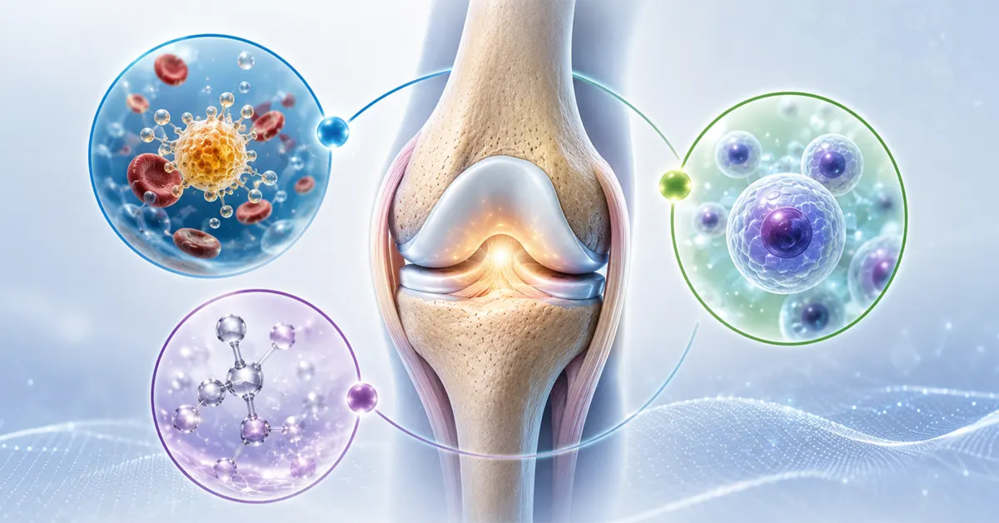
The Role of Medical Massage in Regenerative Therapy
From the Author
This clinically oriented overview was inspired by a discussion in a professional massage therapy Facebook group.
A member of the group posted an article praising stem cell therapy for back disorders, including many testimonials from people who reported significant improvement. I personally like regenerative therapy and believe that, in many ways, it is a blessing for humanity. At the same time, while reading the discussion, I developed an uneasy feeling because of the overall tone.
Approximately 15 years ago, after the massage therapy profession adopted the concept of evidence-based practice, many of us gradually stopped thinking like massage therapists. In many ways, we became distracted from the unique clinical perspective of our own profession.
The following is adapted from my Facebook post:
In regenerative therapy, massage therapy must play — and already does play — a crucial role because we consider factors that conventional medicine often overlooks. For example, we pay close attention to the limited vascular supply of ligaments and the important role of synovial fluid in nourishing connective tissues, including ligaments.
For us, synovial fluid is not simply lubrication. We utilize strategies designed to stimulate diffusion and tissue repair, including periosteal massage techniques intended to promote fibroblast migration and connective tissue regeneration.
Stem cell therapy is often recommended in so-called “bone-on-bone” cases. But what exactly does “bone-on-bone” mean? Does it simply refer to cartilage degeneration? If a patient can still flex and extend the knee — even with limitations — is the joint truly “bone-on-bone”? The language and scientific framework used by orthopedic surgeons are not necessarily the same as ours within the clinical science of massage therapy.”
After my own professional trauma, which I describe in another article, https://www.medicalmassage-edu.com/blog/massage-therapy-demand-vs-client-retention.htm
I conducted extensive personal research on post-pandemic changes throughout the healthcare system. https://www.medicalmassage-edu.com/blog/primary-care-physical-therapy-chiropractic-massage-healthcare-changed.htm
These changes also affect the rapidly growing field of regenerative injections.
From time to time, I work with physicians practicing regenerative medicine. Through these observations, I have developed my own conclusions. As always, I remain open to discussion, constructive criticism, and professional disagreement.
Facts About Regenerative Injection Therapies
Regenerative injection therapies such as Stem Cell Therapy, Platelet-Rich Plasma (PRP), and Dextrose Prolotherapy are designed to stimulate the body’s natural healing mechanisms and improve tissue repair.
Stem cell therapy utilizes undifferentiated regenerative cells capable of developing into specialized tissue cells. These cells release growth factors, signaling molecules, and anti-inflammatory mediators that support tissue regeneration, reduce inflammation, and enhance healing of damaged muscles, tendons, ligaments, joints, and nerves.
Platelet-Rich Plasma (PRP) therapy uses concentrated platelets derived from the patient’s own blood. Once injected into injured tissue, platelets release multiple growth factors that stimulate collagen production, angiogenesis (formation of new blood vessels), cellular repair, and accelerated healing responses.
Dextrose regenerative injections, commonly referred to as prolotherapy, involve the injection of hyperosmolar dextrose solution into weakened or damaged connective tissues. The mild, controlled inflammatory response triggered by dextrose stimulates fibroblast activity, collagen synthesis, tissue strengthening, and repair processes.
A critical factor for successful outcomes in all regenerative therapies is adequate blood supply and proper microcirculation. Healing tissues require oxygen, nutrients, immune regulation, and efficient removal of metabolic waste products. Poor circulation significantly limits cellular repair and reduces the delivery of growth factors and regenerative cells to damaged tissues.
Chronic stress and autonomic nervous system irregularities negatively affect these regenerative mechanisms. Excessive sympathetic nervous system activation (“fight-or-flight” dominance) contribute to vasoconstriction, impaired microcirculation, altered inflammatory regulation, increased muscle tension, and reduced tissue oxygenation. Over time, autonomic dysregulation may compromise healing capacity and reduce the effectiveness of regenerative injections.
In patients with autonomic imbalance, persistent stress physiology interfere with vascular function, lymphatic drainage, tissue recovery, and neuromuscular regulation. Therefore, optimizing autonomic nervous system balance, reducing stress load, and improving circulation play an important supportive role in maximizing the effectiveness of regenerative medicine procedures and improving long-term clinical outcomes.
Opinion and Conclusion
Most people pursue regenerative therapies in an effort to avoid or prevent surgery.
Between 2020 and 2025, the use of regenerative injections — stem cells, platelet-rich plasma (PRP), and dextrose prolotherapy — increased dramatically. Driven by rising demand for non-surgical treatment options for chronic musculoskeletal pain, spine disorders, and joint degeneration, the global regenerative medicine market expanded rapidly, reaching an estimated $35.5 billion in 2024 and projected to exceed $90 billion by 2030.
At the same time, spinal and orthopedic interventions continued to rise significantly, reflecting both the growing burden of chronic pain and the limitations of conventional treatment approaches.
Obviously, something is not working.
The biological rationale behind regenerative injections is scientifically compelling. Platelet-rich plasma (PRP) delivers concentrated growth factors and signaling molecules capable of stimulating angiogenesis, fibroblast proliferation, collagen synthesis, and tissue remodeling. Stem cell therapies attempt to enhance tissue repair through immunomodulation, cellular signaling, and regenerative activity, while dextrose prolotherapy promotes connective tissue strengthening through controlled inflammatory stimulation.
However, one critically overlooked factor in regenerative medicine is the physiological environment into which these injections are introduced. Successful tissue healing depends heavily on adequate blood supply, microcirculation, oxygen delivery, lymphatic drainage, and autonomic nervous system regulation.
A major 2023 review published in Biomedicines emphasized that angiogenesis — the formation of new microvascular networks — is a “critical first step in tissue repair” and that regenerative therapies such as PRP depend directly on restoration of oxygen and nutrient delivery to damaged tissues. The authors specifically noted that impaired angiogenic capacity and chronic inflammatory states can significantly compromise tissue healing outcomes.
Additional research published in Transfusion demonstrated that PRP stimulates fibroblast proliferation, migration, chemotaxis, and angiogenesis — all fundamental biological processes necessary for successful wound healing and tissue regeneration.
This becomes highly relevant in patients suffering from chronic stress physiology and autonomic nervous system dysregulation. Persistent sympathetic nervous system activation may contribute to vasoconstriction, impaired tissue perfusion, altered inflammatory signaling, reduced oxygenation, and compromised microcirculation. In such cases, the body may become biologically less capable of supporting the regenerative response these injections are designed to stimulate.
In other words, regenerative medicine may not simply depend on what is injected, but also on the physiological state of the patient receiving the injection. If autonomic dysfunction, impaired circulation, and chronic stress-related inflammatory dysregulation remain unaddressed, regenerative outcomes may become less predictable and less sustainable over time.
References
- Andia I, Maffulli N. “Platelet-rich plasma for managing pain and inflammation in osteoarthritis.” Nature Reviews Rheumatology. 2013.
- Magalon J, et al. “Regenerative approaches to tendon and ligament healing.” Biomedicines. 2023.
- Etulain J. “Platelets in wound healing and regenerative medicine.” Platelets. 2018.
- Nurden AT. “The biology of platelet-rich plasma and its application in regenerative medicine.” Transfusion. 2020.
- Grand View Research. “Regenerative Medicine Market Size Report, 2030.”
Add New
Comments
no comments found
Recents Posts
September 09 2026
Constantly Reproduced Clinical Evidence vs. Acceptable Language in Research Papers
August 31 2026
Disconnect of Research Data From Clinical Reality. Working Out, Increasing Muscle Mass, and Preventing Alzheimer’s Disease?
August 24 2026
The Hidden Healthcare Crisis: Why the General Population Must Learn Self-Treatment Strategies part 1


