Fascial Tensions from a Massage Therapist's Point of View. Part Two.
August 10 2026
To read Part One of this article, please click the link below.
Fascial Tensions from a Massage Therapist's Point of View — Part One
Fascia, Proprioception, and the Hidden Cause of Balance Disturbances
At the end of Part One, I described a conversation with my mentor, a neurologist, sports medicine specialist, and rehabilitation physician with decades of clinical experience treating patients recovering from ischemic strokes, traumatic brain injuries, and the burnout phenomenon observed in Olympic athletes.
During our discussion, he surprised me by saying that many patients who had regained muscle strength and neurological function still struggled with balance. Even more interesting, the rehabilitation team repeatedly observed that these patients demonstrated significant fascial tension throughout the body, especially in the lower extremities.
His next explanation became a fascinating learning experience for me.
He explained that, by that time, he and his rehabilitation team no longer viewed fascia as merely connective tissue surrounding the muscles. Instead, they recognized fascia as a continuous three-dimensional system extending throughout the entire body.
It surrounds and connects muscles, tendons, ligaments, nerves, blood vessels, internal organs, and joints into one integrated functional unit.
A restriction in one region of the body can influence movement and function in distant areas through this continuous fascial network.
This concept represents one of the greatest advances in our understanding of human movement.
The Role of Proprioception
My mentor then shifted the discussion toward proprioception.
Most people are familiar with the five traditional senses: vision, hearing, smell, taste, and touch. However, another sensory system is equally important—proprioception.
It allows the brain to recognize the position of every joint and body segment without looking. It enables us to stand, walk, climb stairs, reach for objects, and maintain balance automatically.
His research has demonstrated that fascia contains numerous sensory receptors involved in proprioception. These receptors continuously transmit information from muscles, tendons, ligaments, and connective tissues to the central nervous system.
Every step we take depends upon the accuracy of this information.
When fascial tissue loses its normal mobility because of chronic tension, previous injury, prolonged inactivity, repetitive overload, or abnormal movement patterns, these sensory signals may become altered.
The muscles themselves may still be strong, and the brain may have recovered remarkably well, yet distorted sensory input from the fascial system can continue to interfere with normal balance and coordinated movement.
This explanation immediately made sense to me.
Chronic Stress, Long COVID, and Balance
During the last five years, my primary clinical interest has been rehabilitation of patients suffering from chronic stress-related disorders and Long COVID.
The majority of these individuals present with:
- Headaches
- Dizziness
- Brain fog
- Sleep disturbances
- Autonomic dysfunction
- Impaired balance
As I discussed in Part One, successful treatment of chronic stress-related disorders requires restoration of normal brain function by improving circulation, supporting drainage of brain fluids, reducing muscular tension, and normalizing autonomic nervous system activity.
These patients frequently experience remarkable improvements in cognitive function, sleep quality, headaches, dizziness, and overall quality of life.
Nevertheless, some patients continued reporting a subtle feeling that their balance was "not completely normal."
They were not falling. Neurological examinations were often reassuring. Their brain-related symptoms had improved dramatically. Yet something still prevented complete restoration of balance.
Looking Beyond the Brain
Following my mentor's advice, I began paying much closer attention to fascial restrictions throughout the body, particularly within the lower extremities.
Instead of assuming that every remaining balance disturbance originated from the brain, I started considering another possibility: perhaps the remaining dysfunction was mechanical rather than neurological.
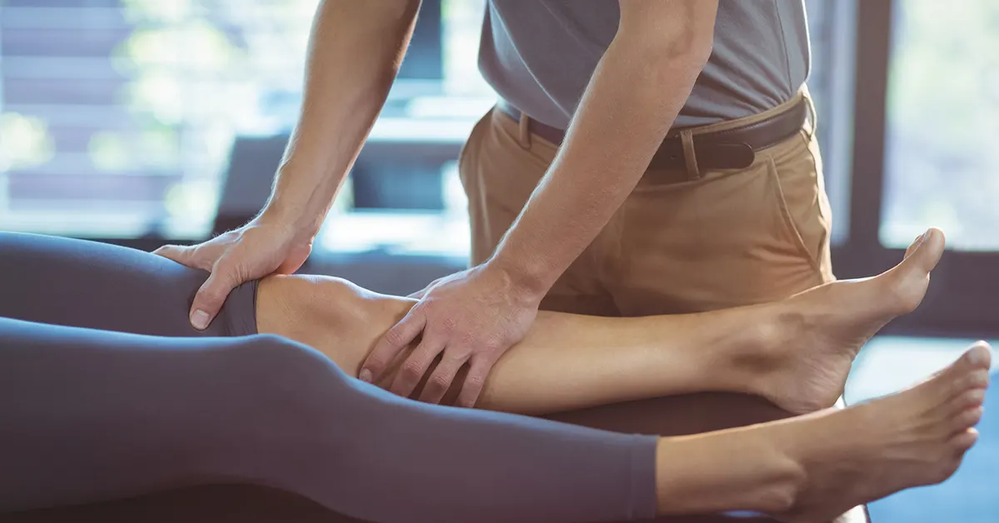
I incorporated a more extensive program of fascial mobilization and release involving the lower extremities while continuing my existing rehabilitation protocol.
The clinical response surprised me.
Patients frequently reported noticeable improvements in stability within a relatively short period of time.
- Walking became more confident.
- Turning was easier.
- Standing on one leg improved.
- They simply felt steadier.
This experience reminded me once again that rehabilitation should always consider the entire body rather than focusing on a single structure or organ system.
The Body as an Integrated System
The human body functions as one integrated biological system.
Muscles, fascia, joints, blood vessels, the nervous system, and the brain continuously communicate with one another. When one component becomes dysfunctional, the effects are often transmitted throughout the entire system.
As massage therapists, we should never underestimate the importance of careful hands-on evaluation.
Modern imaging is indispensable for identifying structural pathology, but chronic muscular and fascial tension frequently represents a functional disorder that cannot be visualized directly by conventional MRI or other imaging studies.
Our hands remain one of our most valuable diagnostic tools.
Education Never Truly Ends
For me personally, this has been another reminder that our education never truly ends.
After more than 50 years in clinical practice, I continue learning from experienced physicians, researchers, colleagues, and, most importantly, from my patients.
Every new clinical observation teaches us something valuable.
Every thoughtful discussion opens another door.
Every patient presents another opportunity to improve our understanding of the remarkable human body.
The sky truly is the limit when it comes to expanding our knowledge and developing better ways to help those who trust us with their care.
```
Add New
Comments
no comments found
Recents Posts
September 09 2026
Constantly Reproduced Clinical Evidence vs. Acceptable Language in Research Papers
August 31 2026
Disconnect of Research Data From Clinical Reality. Working Out, Increasing Muscle Mass, and Preventing Alzheimer’s Disease?
August 24 2026
The Hidden Healthcare Crisis: Why the General Population Must Learn Self-Treatment Strategies part 1
August 16 2026
Are We Afraid to Learn? Medical Massage, Evidence-Based Practice, and the Future of Our Profession
August 03 2026
Fascial Tensions from a Massage Therapist’s Point of View


